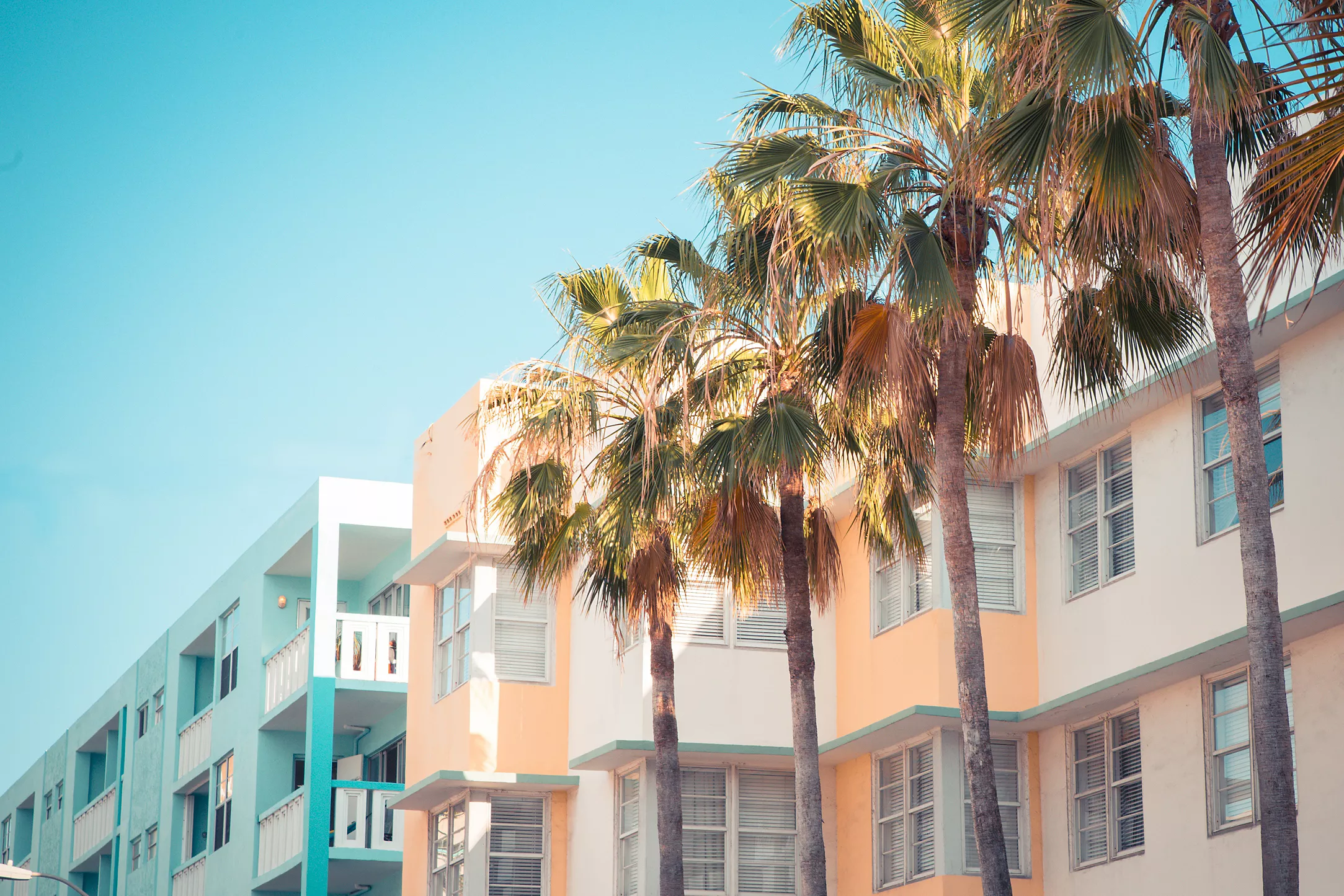
Our Coast-to-Coast Styles journey continues in Miami Beach, where architecture comes with a little more color. Pastel facades rise behind the palms, curved corners soften geometric forms, and neon signs begin to glow as daylight fades. Miami Beach is home to more than 800 Art Deco properties built between the 1920s through 40s, creating one of the world’s most distinctive collections of 20th-century design.
Miami’s version of Art Deco feels inseparable from its coastal setting. Symmetry and clean lines remain, but the colors are lighter, the forms feel more fluid, and tropical influence is never far away. Streamline Moderne introduced smooth curves, glass block windows, terrazzo floors, bold signage, and architectural details designed to evoke movement and optimism.
For the next chapter of Coast-to-Coast Styles, we’re looking beyond the postcard view to explore what makes Miami Art Deco interior design so memorable. A confident color, an artful pattern, or one well-placed curve can bring the spirit of South Beach into an entirely new setting.
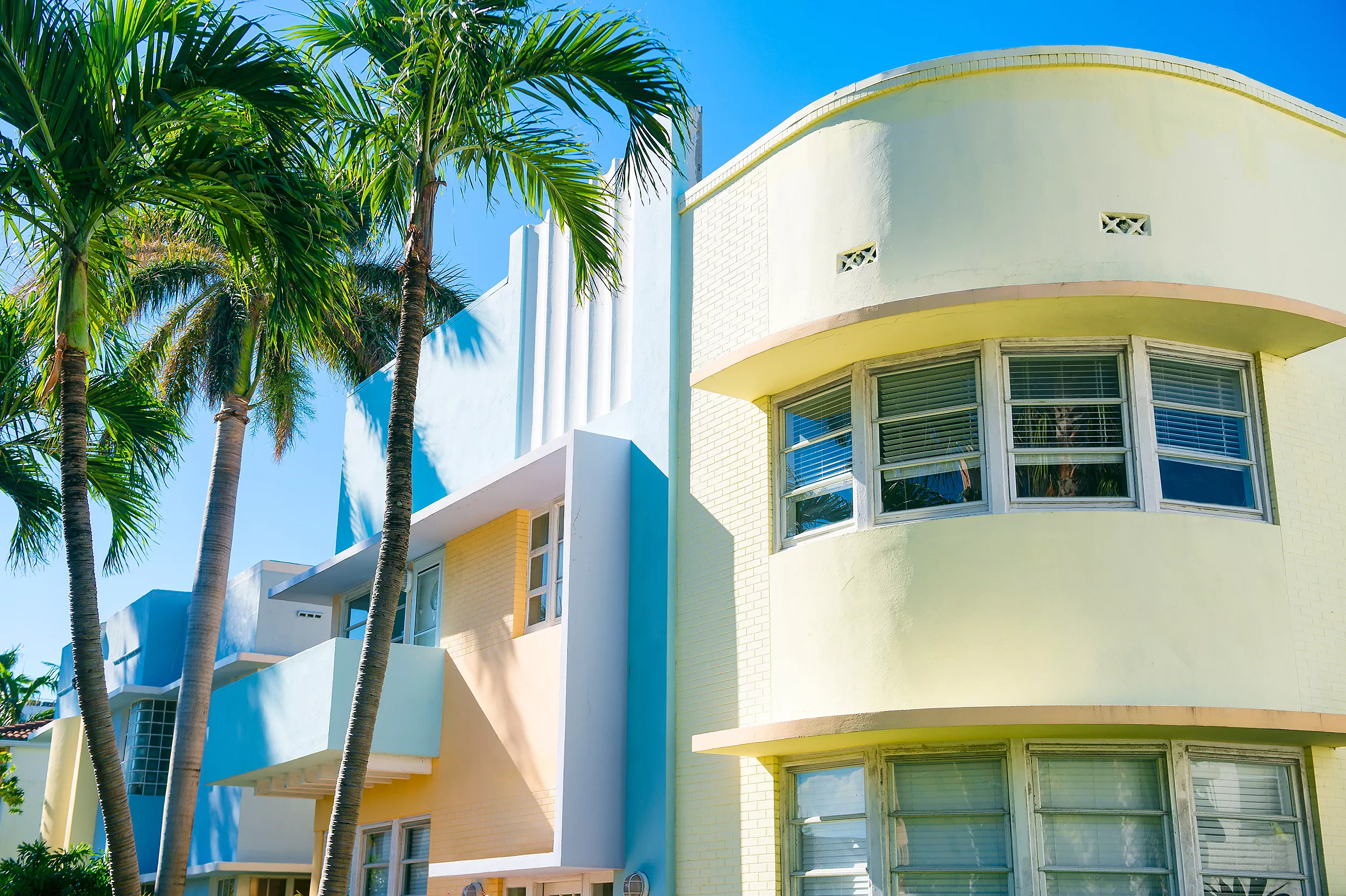
The South Beach Palette
Miami Art Deco begins with colors that look especially good in the sun. Blush pink, seafoam green, turquoise, pale yellow, and crisp cream appear throughout the district. After dark, neon lighting creates another layer, sharpening architectural details without losing the playful quality that makes Ocean Drive so recognizable.
At home, the palette feels most refined when it is interpreted rather than recreated. Begin with a light foundation, choose one coastal color to carry the story, then introduce contrast through flooring, textiles, art, or detailed metal accents.
The Foundation: Cream, sand, or soft white creates an airy canvas. Whitetail (SW 7103) is a warm white that creates an airy canvas, giving stronger colors and architectural details room to stand out.
The Color: Coral, aqua, seafoam, or golden yellow introduces tropical warmth. Fervent Brass (SW 6405) brings subtle warmth that pairs naturally with bolder color and geometric details.
The Contrast: Rich brown, deep blue-green, or warm metal gives the softer shades definition. Sea Salt (SW 6204) is a soft blue-green that introduces a cooler coastal note that feels especially at home beside warm woods and richer flooring.
The right combination should feel expressive, not overly coordinated. A wash of blue-green can bring a cool coastal influence to a quiet room, while coral or golden yellow introduces warmth in smaller, more thoughtful moments. Rather than filling the room with every shade at once, let one color lead and allow the others to appear in measured layers.
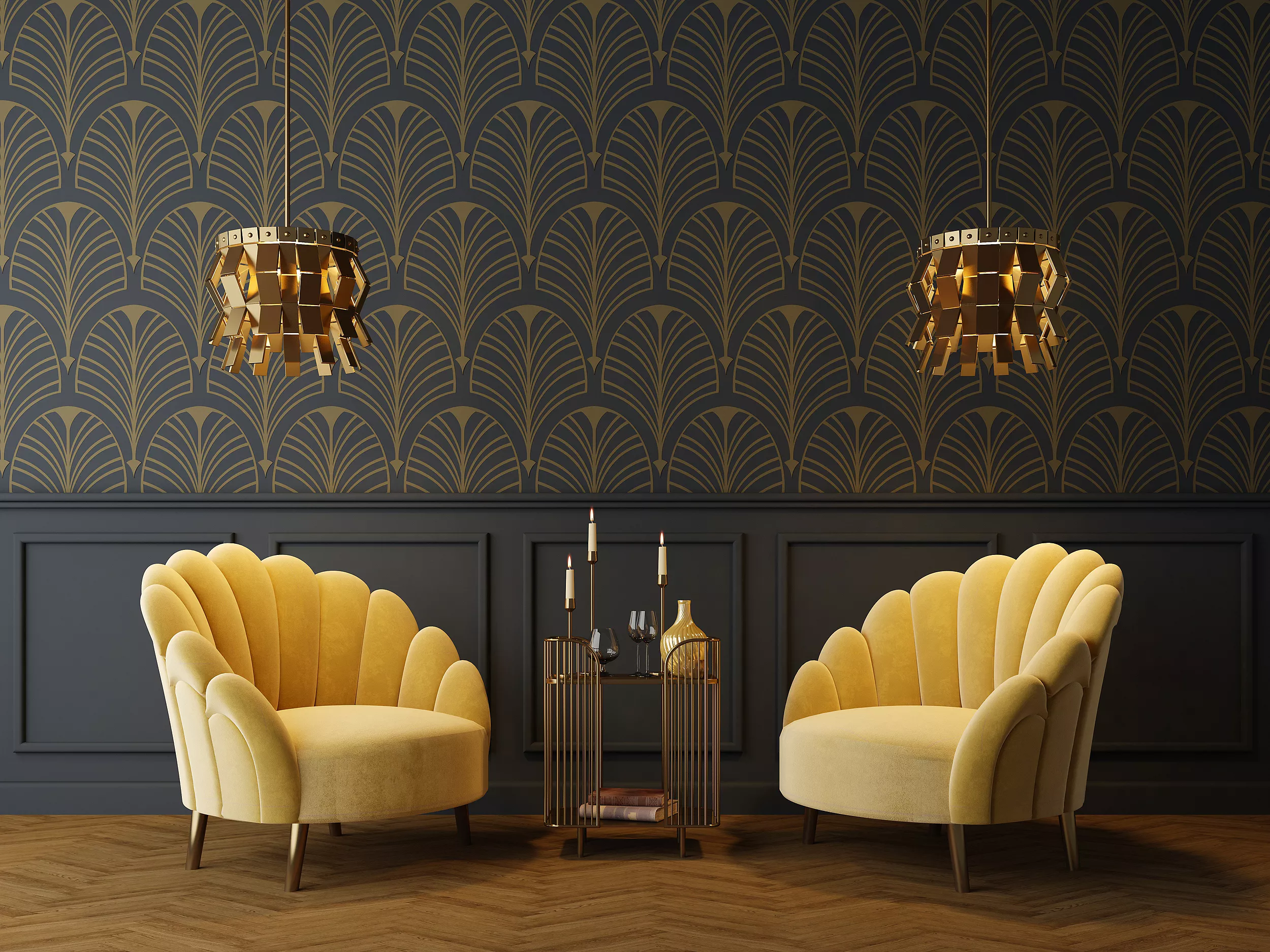
Defining Miami Art Deco
Color may catch your eye first, but geometry gives Miami Art Deco its structure. Look closer and you’ll notice rooflines, vertical bands, rounded corners, and motifs inspired by sunbursts, fountains, and the ocean. These details create rhythm and give even smaller buildings a distinctive presence.
Inside the home, the same principles can shape a room without overdoing it. A curved chair can echo the architecture’s fluid lines, while repeated shapes can create movement. Patterned carpet can introduce geometry underfoot while softening cleaner silhouettes and more structured furnishings.
Art Deco embraces personality, but the most compelling spaces still establish a clear focal point. A richer flooring color, sculptural light, artful carpet pattern, or curved furnishing can lead the room while the surrounding details take on a quieter role.
The Foundation: Carpet With Character
Flooring offers a natural way to bring Art Deco influence home because it can establish color, texture, and movement before the rest of the room takes shape. Karastan® carpet adds softness to streamlined forms and gives geometric details a warmer, more livable foundation.
For a distinctive interpretation of Miami’s coastal palette, Enduring Heirloom in Dragonfly introduces a rich blue-green hue that pairs beautifully with creamy walls, curved furnishings, and warm metal accents. Rionel in Sienna offers a warmer direction, bringing depth to coral, terracotta, and sun-washed neutrals. For a quieter approach, Refined Legacy in Homespun adds thoughtful texture without competing with colorful art or stronger architectural lines.
The goal is not to transform a room into a historic hotel. It is to capture the confidence behind the style. A rich carpet color, textured surface, or detailed pattern can reference Miami’s architectural character while still creating a room that feels comfortable, contemporary, and ready for everyday living.
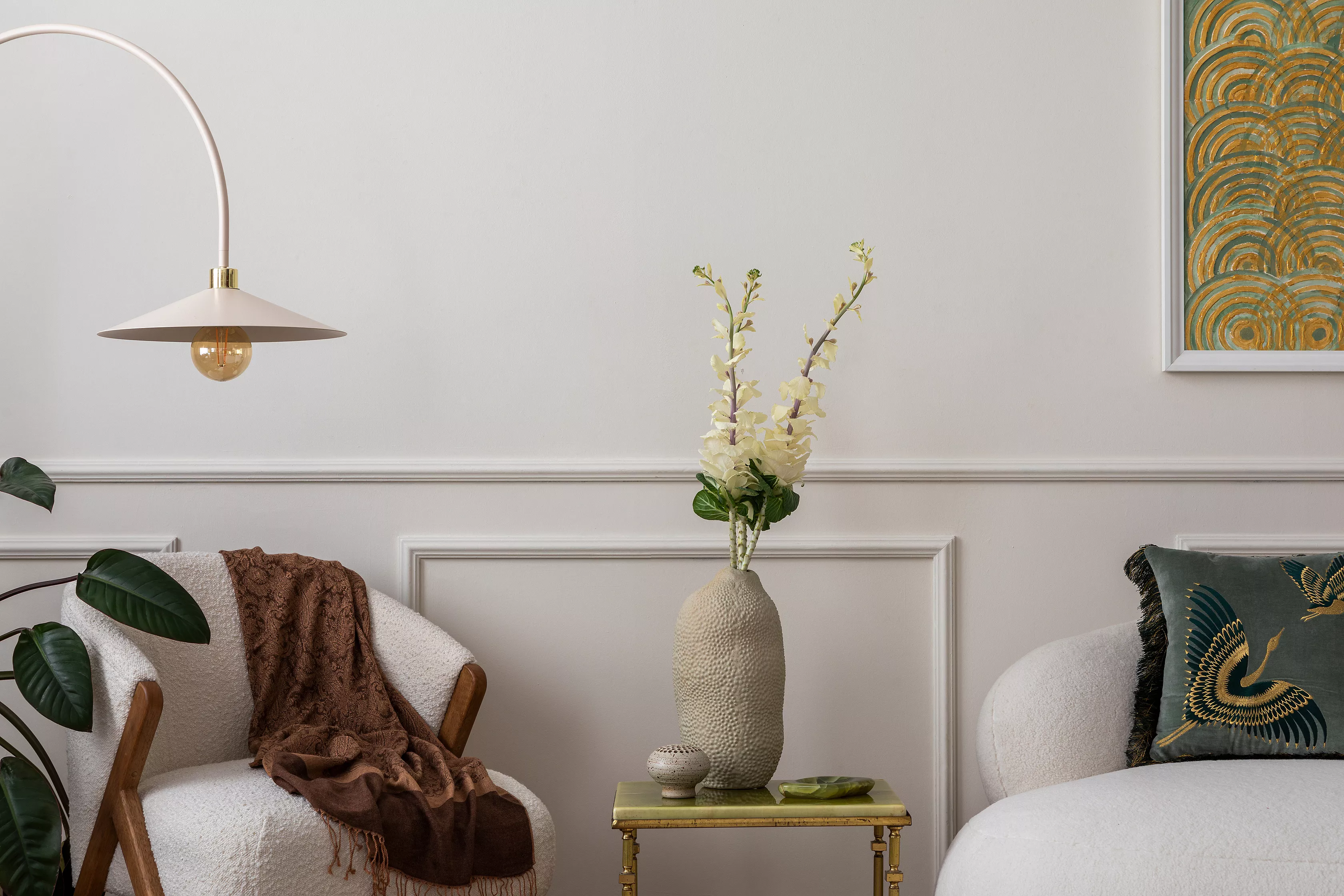
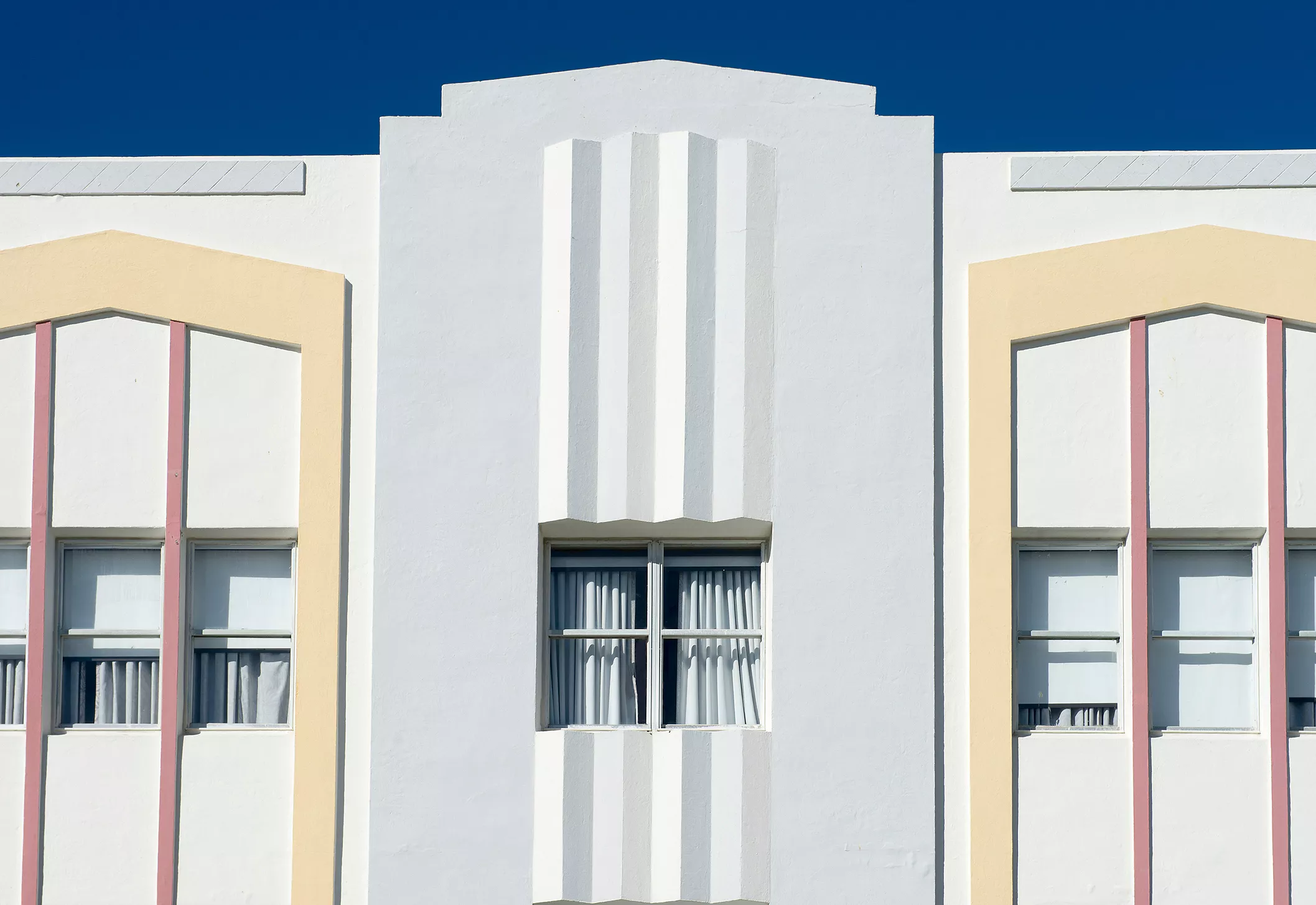
Miami Art Deco is memorable because every detail belongs to the same visual story. Tropical color, curved facades, rhythmic geometry, and illuminated accents work together to give the district its unmistakable presence. Brought indoors, those ideas become an invitation to use color with confidence, give pattern a purpose, and let one thoughtful detail shape the atmosphere of a room.
There is still more to see. Beyond the palette and architecture are interiors, landmarks, and design ideas that continue to make Miami Beach worth a closer look.
Ready to begin your own design journey?
More stops await on our travel itinerary. Follow along with the Coast-to-Coast series as we uncover more architectural traditions and the Karastan floors that bring each story to life. For more travel stops, visit our blog to learn more about San Diego’s Spanish Colonials.


